Are you tired of misplacing your house keys and struggling to manage multiple door entries? Traditional locks no longer meet today’s needs, and many homeowners and businesses are looking to upgrade to digital locks.
In commercial spaces, employees keep changing, and daily, many entries need to be managed. With so much to manage, physical traditional locks are not only inconvenient but also open doors for many of the unauthorised activities due to poor manual management and tracking. Homeowners want the flexibility and convenience of remote control access while they are away, with better convenience while they are home.
This is the reason smart door locks are no longer an option; these have become a real necessity for better control and safety for homes and commercial properties across NYC.
This guide covers general door lock recommendations, an introduction to smart locks, how they work, and which option, Wi-Fi or Bluetooth, is best for you.
What Are Smart Door Locks?
Traditional locks used to have a key that had to be inserted into the lockset, but with smart locks, you feel the freedom of going keyless, with better security.
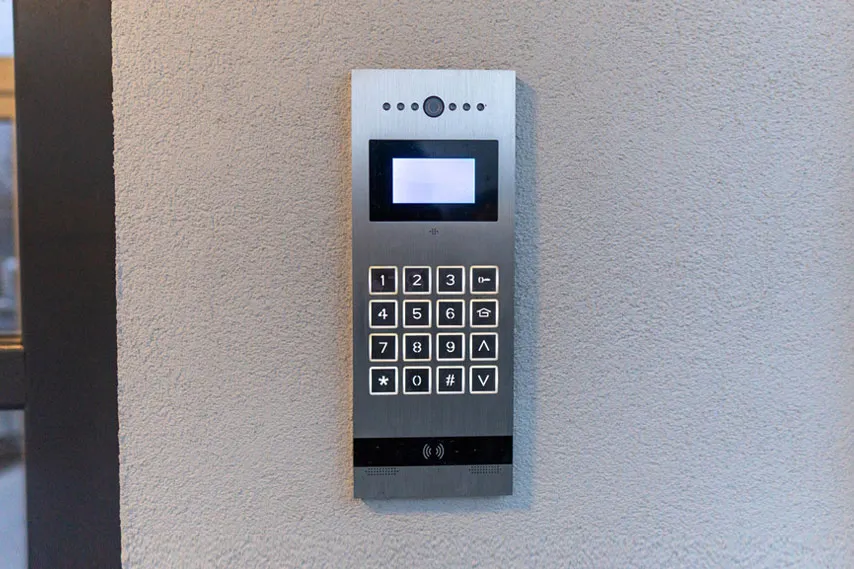
Smart door locks allow the user to manage the locks with multiple unlocking methods, with no dependency on keys, and can be controlled via unlocking methods such as the following:
- PIN
- Biometrics – fingerprint
- Biometrics – Facial recognition
- RFID or NFC cards
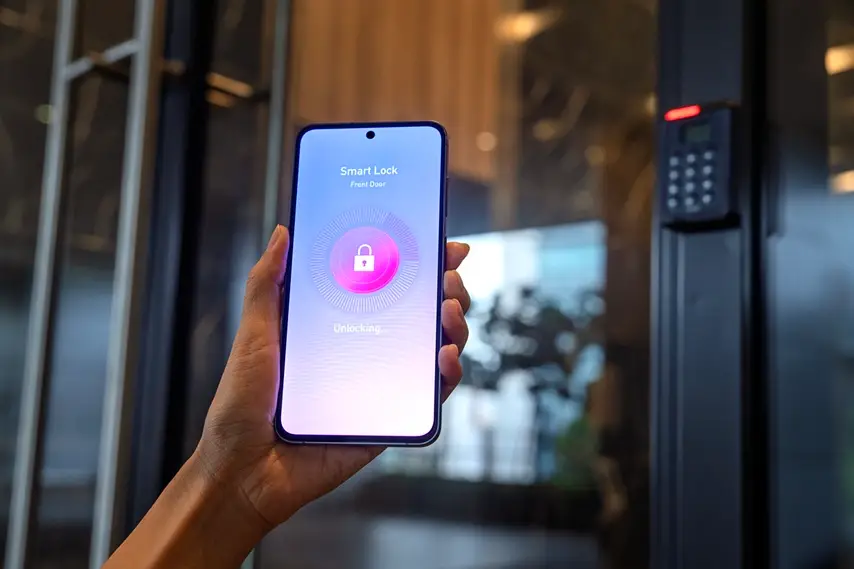
- Smartphone app
- Voice assistants such as Amazon Alexa or Google Home
These are the benefits you get with smart locks:
- You can unlock and lock the door with just an app.
- Digital accessibility provides flexibility in getting real-time phone notifications.
- Provide better monitoring; you can see exactly who entered when. It keeps a record of all the activity history.
- Better management of daily activities
- Benefit of temporary or one-time password code entry for guests, service professionals, or for delivery.
- Easy, flexible remote control with app-based management
However, it may not provide the complete security system solution, but it can effectively help in better monitoring, controlling, and managing daily activities with convenience.
Wi-Fi vs Bluetooth Smart Door Locks: Key Differences
Both Wi-Fi and Bluetooth smart door locks provide keyless entry, but they are designed for different needs, and their functioning is also different.
Remote Access
The first fundamental difference between the two is connectivity and the distance from which you can have access to control of the lock.
Whereas Wi-Fi smart locks directly connect with the internet. This enables you to have control to lock and unlock the door via your mobile app from anywhere. You can get real-time notifications and check for door safety even if you are far away. Best suited for businesses with multiple managers and managing deliveries while far away.
Bluetooth smart locks can work over short distances with point-to-point communication. It means you must be around 25 to 50 feet from your door to unlock it automatically. Best suits those who look for better convenience for entries at home or on-site.
Battery Life
Wi-Fi locks work on a regular active internet connection. So, the battery needs more power consumption. Replacements are needed frequently, with batteries lasting from 3 to 6 months, depending on the usage and other factors.
Bluetooth locks consume less energy and activate only when the device is in range. This results in longer battery life, which can last from 1 to 2 years with lower maintenance costs.
Installation & Connectivity
Most of the smart locks are designed to fit in with existing standard, single-cylinder deadbolts. Installation typically requires one tool – a Phillips-head screwdriver, adapters (plastic pieces) included in the box, and adhesive tapes. But in the case of older buildings, additional hardware may be required.
Wi-Fi models work on active internet connections, and the control range is global. But if the signal is not proper, performance gets affected.
Bluetooth models do not need any internet coverage but require your phone to be in a nearby range. It is a more convenient option to have the door unlocked automatically without even touching the button. No remote accessibility is available, but if needed, then additional upgradation of a bridge gateway device may be used.
Security Features
Both Wi-Fi and Bluetooth smart locks use encrypted communication so that protection against any digital signal that can decode or spoof can be provided.
Wi-Fi devices have access to smartphone apps using codes (via SMS or email) or biometrics (Face ID/fingerprint) to provide permissions and help protect against unauthorised access from anywhere globally. Moreover, many smart locks use alarm systems or push notifications as soon as the door is unlocked, which helps in precise tracking. Though hacking is rare with reputed brands, theoretically, these are exposed to remote hacking.
Bluetooth devices are less exposed to remote, internet-based attacks and continue to function during an internet outage or power disruption, since they don’t rely on a network connection. That said, no lock is fully immune to hacking — Bluetooth locks can still be vulnerable to close-range attacks like signal relay or replay if not properly secured.
Which Smart Door Lock System Is Best for Homes?
The right solution depends on your needs and how the property needs to run.
For apartment owners, rental properties, monitoring kids away from home, or if you need to manage guests and deliveries frequently, then Wi-Fi locks work better. With this option, temporary access codes can be created, providing temporary access.
If you are someone who is looking for a simple installation without relying on internet connectivity and remote access flexibility with a budget-friendly option, then Bluetooth devices work better.
Which Smart Door Lock System Is Better for Businesses?
Commercial properties need to have stricter access needs than residential ones.
In office spaces, multiple employees and other staff need to be managed. Here, Wi-Fi locks effectively manage all the permissions and check on each entry automatically with timely monitoring.
Retail stores also need to manage stockrooms and offices and monitor entrances. With digital credentials, unwanted theft-like activities can be better controlled with proper tracking of employees entering and exiting.
Wi-Fi-based devices allow people in administration to manage permissions from several locations and provide broader access control.
Companies like MetroCom Security provide solutions with better guidance and professional Door Lock System installation so that your business can grow, covering all your needs effectively.
What to Consider Before Choosing a Smart Door Lock
Before you buy your smart door locks, consider asking yourself these questions:
- Do you need to control the lock while away from the property?
- How many people will need regular access?
- Will access permissions change frequently?
- Does the lock need to integrate with an existing access control or security system?
- Is your Wi-Fi signal strong enough at the entrance?
- Would professional installation help ensure long-term reliability?
Making yourself clear on these questions protects you from further changes of plans, upgradation or later regrets.
Conclusion
There is no doubt that Wi-Fi and Bluetooth smart door locks provide you with a better alternative to traditional locks. These smart devices provide you with several benefits that enable protection with better care and safety.
For those who want a flexible option with better remote access, a Wi-Fi device is the better option, whereas for those who want longer battery life, a budget-friendly option with low-cost maintenance and power consumption, Bluetooth devices work well.
What is best for you is dependent on several factors, such as the type of property, security goals, and how the lock has to be used.
For complete guidance and security access services, providers like MetroCom Security give you complete coverage from finding the right smart lock device for current and future needs to the perfect professional installation.
 (866) 470-2244 |
  concierge@metrocom.us
Also, find MetroCom on Yelp for trusted reviews and business information.